Reviews
Review: Roland Cloud SH-101: The Complete Revival of the "Snappy Bass" That Built Techno and Acid
Rating: 4.6 / 5.0
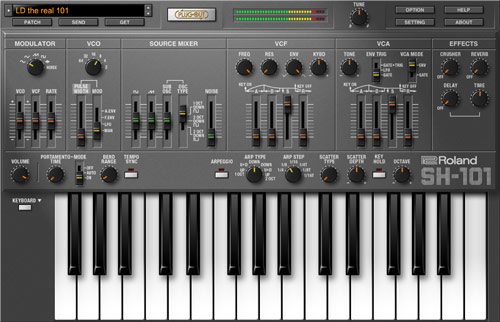
The "SH-101" offered by Roland Cloud's official website is an official plugin that fully recreates the legendary monophonic synthesizer that has been the foundation of techno, house, and acid music since its release in 1982, using Roland's proprietary "ACB (Analog Circuit Behavior) technology."
In recent years, many software manufacturers have released SH-101 clones, but this plugin by Roland itself faithfully models the behavior at the circuit level.
This article places the greatest weight on evaluations and discussions in communities such as KVR Audio Forum, Reddit, and YouTube, and thoroughly reviews the real value of this product, including the fierce comparison debates with competing plugins (especially TAL-BassLine-101). [cite: 1.2.6]
1. Evaluation Trends Across Communities and Platforms (Significantly Expanded)
In the world of SH-101 software emulations, the Roland Cloud version always sparks intense debate between "ultimate sound quality" and "platform usability." [cite: 1.2.6]
- KVR Audio Forum Evaluation: "The Final Push of Oomph (Punch)":
- On the KVR forum, comparison threads with TAL-BassLine-101 are frequent. [cite: 1.2.6] Many users conclude that "TAL wins in usability, but in terms of the 'Oomph' (low-end punch and drive) of the output and the precise response of the envelope, the official Roland version wins." [cite: 1.2.6] In particular, the characteristic saturation (analog-style distortion to prevent clipping) applied to the global output is highly praised by sound designers for perfectly capturing the texture of the original hardware. [cite: 1.2.6]
- Reddit (r/synthesizers, r/edmproduction) Discussions:
- On Reddit, the mainstream opinion is that "the sound is an undisputed masterpiece, but the subscription and the constant presence of Roland Cloud Manager are troublesome." [cite: 1.2.6] The community consensus is a division of roles: "If you want to use it smoothly offline, choose TAL; if you want to play the absolutely uncompromising bassline that is the main element of a track, choose Roland." [cite: 1.2.6]
- YouTube Hardware Comparison Reviews:
- In A/B test videos comparing the original SH-101 hardware by synth enthusiasts on YouTube, the ACB technology has been received with surprise for reaching "almost indistinguishable levels" in the filter's "squelch" when resonance is set high, and in the analog-specific behavior when mixing the noise oscillator.
2. Main Modules and Architecture
The reason the original SH-101 was loved is its "simplicity that never produces a bad sound." The Roland Cloud version fully inherits this philosophy.
| Module Type | Features and Community Evaluation |
|---|---|
| VCO (Oscillator) | Mix sawtooth wave, square wave (PWM), sub-oscillator, and noise with sliders. The thickness of the sub-oscillator is praised as "essential for acid house." |
| VCF (Filter) | Roland's characteristic rubber-like, springy 24dB low-pass filter. The sound when self-oscillating is very musical. |
| VCA / Envelope | Only one ADSR envelope. This "snappy attack feel" is the biggest secret to making fast 16th-note techno basslines sound tight. [cite: 1.2.5] |
| Arpeggiator / Sequencer | Reproduces the simple sequencer of the original hardware. However, some in the community point out that "it is a bit difficult to use in today's DAW-centric era." [cite: 1.2.6] |
3. Sound Quality: The Decisive Difference from the Eternal Rival "TAL-BassLine-101"
Summarizing community discussions, there is a clear difference in character between the two. [cite: 1.2.6]
- Strengths of Roland Cloud SH-101: "Sound density and saturation." [cite: 1.2.6] When the filter is closed and used as a sub-bass, the speaker-shaking heavy low end, and the analog-specific "click" in the attack, give the advantage to the official ACB technology. [cite: 1.2.6]
- Strengths of TAL-BassLine-101: The overwhelmingly light CPU load, the clean and easy integration into modern mixes, and the excellent usability of the sequencer/arpeggiator. [cite: 1.2.6] Among KVR users, there are not a few who say, "I prefer the sound of Roland, but I choose TAL for the comfort of the workflow." [cite: 1.2.6]
4. Usability and System Load (Cloud Friction)
- High CPU Load Due to ACB: Like the JUNO-106, because it performs circuit-level modeling, the CPU load is high even for a monophonic synthesizer. If you use it on multiple tracks, PC specs are required. [cite: 1.2.6]
- The Wall of Roland Cloud Manager: This is the most frequently cited complaint on Reddit and elsewhere. [cite: 1.2.6] The system requires the app to be running in the background at all times and periodic online authentication, which is a factor that creators who prefer working offline shy away from. [cite: 1.2.6]
Summary of Pros and Cons
Pros
- The Absolute "Official" Sound: The snappiness of the envelope and the "Oomph" in the low end that no one else can match. [cite: 1.2.6]
- Perfect Filter Behavior: The musical self-oscillation (squelch) when resonance is raised is reproduced accurately.
- Intuitive UI: The original hardware is brought directly to the screen, with slider operations that leave no room for confusion.
- PLUG-OUT Support: Can be transferred to compatible hardware such as the SYSTEM-8 for PC-less use.
Cons
- Higher CPU Load Compared to Competitors like TAL: The weight is the price of circuit modeling. [cite: 1.2.6]
- Subscription and Resident App: Dependence on Roland Cloud Manager and the hassle of periodic authentication. [cite: 1.2.6]
- Built-in Sequencer Specifications: Some say it is somewhat outdated and difficult to use in modern DAW workflows. [cite: 1.2.6]
Overall Review: The One and Only Choice If You Demand Uncompromising "Authentic Techno Bass"
The Roland Cloud SH-101, despite being criticized in the community for system friction such as CPU load and the Cloud system, boasts an overwhelming sound that makes producers say, "Even so, this sound is necessary for the heart of the track (the bassline)." [cite: 1.2.6]
If you seek "convenience and lightness," TAL-BassLine-101 is a great alternative, but if you want to perfectly reproduce "that springy, authentic bass sound that shook clubs in 1982" in your DAW, this plugin by Roland with ACB is undoubtedly the "final answer." [cite: 1.2.6]